
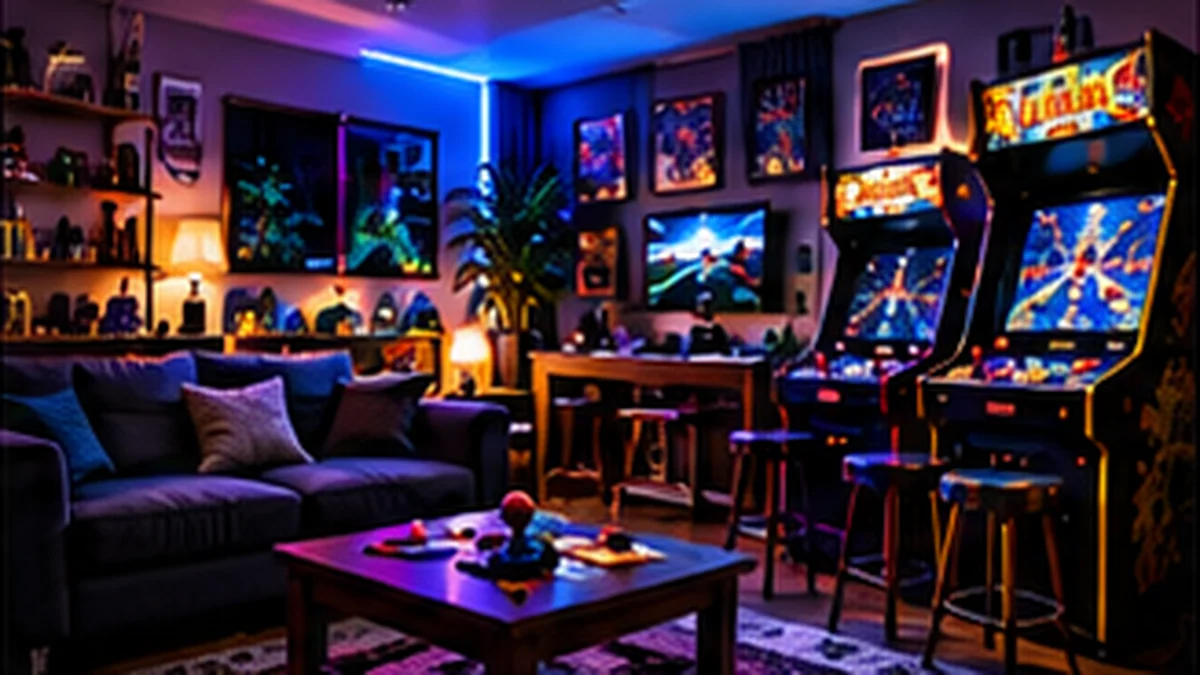
Map the room at full scale
Use painter's tape or cardboard footprints to mark cabinet depth and width on the floor. Add the space a stool occupies and the distance required to walk behind a seated player.
Do not forget open-door depth. Some front doors swing far enough to collide with the next machine or a wall.
Think about concentrated weight
Slot cabinets are heavy, and several machines lined up create a concentrated load. On a slab this is often straightforward; on an upper floor or questionable structure, the responsible move is to consult someone qualified to assess the building rather than guessing from internet averages.
Use stable stands designed for the cabinet footprint. A narrow improvised pedestal increases tip and movement risk.
Plan cables before decoration
Put outlets where cords do not cross walking paths. Keep power strips accessible rather than burying them behind cabinets that are difficult to move.
Separate decorative lighting from service access. A beautiful LED strip that blocks a panel or traps heat is a poor trade.
Ventilation and heat
Electronic cabinets produce heat. Leave the ventilation openings clear and avoid enclosing a machine tightly in cabinetry unless the enclosure was designed for airflow.
Dust control matters too. A game room with carpet, pets or open windows may need more frequent cleaning around vents.
Design for maintenance
The best collector room lets you reach locks, doors and rear panels without moving three other machines. Serviceability is part of the layout, not an afterthought.
See current marketplace examples
Use listings to study cabinet styles, parts availability and seller documentation. A listing is not proof of legality, compatibility or condition.
Search eBay examples →Related resources
Affiliate disclosure: qualifying purchases through some merchant links may generate a commission. Marketplace listings are third-party seller claims; verify condition, compatibility and legality independently.